Dharamsala | Virtual Tour | Places to see | Climate | How to reach Dharamsala | Map |
|
Dharamsala
is a hill station located in the northern regions of India in the State of Himachal Pradesh.
The town of McLeod Ganj in Upper Dharamsala is known worldwide as
His Holiness
the Dalai Lama resides here and is also known as Little Lhasa of Tibet. The main temple is where
His Holiness the Dalai Lama gives teachings several times a year. His Holiness’ residence is located near the
main temple and the headquarters of the Tibetan Government in Exile is located just below McLeod Ganj.
|
|
 His Holiness the Dalai Lama
|
|
|
Virtual tour of places in and around Dharamsala |
Places to Visit in Dharamsala
|
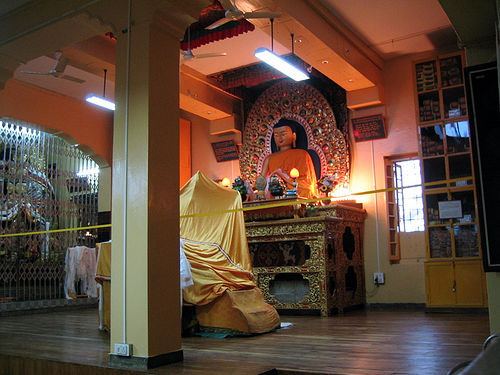
The Main Temple [#1] (The Tsuglagkhang Temple complex, or the Dalai Lama Temple) is the most sacred monument in McLeod Ganj.The temple houses larger than life statues of the Buddha, Padmasambhava and Avaloktwshwara. The temple also houses one of the largest collections of sacred Tibetan texts. You can meditate or You can take a serene morning or evening walk around the temple.It is 10 minutes walk from the guess house. |
|
|

|
|
The Norbulingka is an institution dedicated to the preservation of Tibetan Art and culture. The Nobulingka is situated in the valley below Dharamshala, 20 mins from Dharmashala bus station + 15 min walk, or 20 minutes from McLeod in a taxi. Some of the skills being imparted to the resident Tibetan artists at Norbulingka include traditional Tibetan statue making, thangka painting, woodcarving and metal craft. The complex has a small temple (Seat of Happiness temple), a Tibetan dolls museum, a guesthouse and a shop selling products made by the resident artists. Products sold at the institute are extremely good in quality and made by Tibetans. The Norbulingka institute, Official website |
|
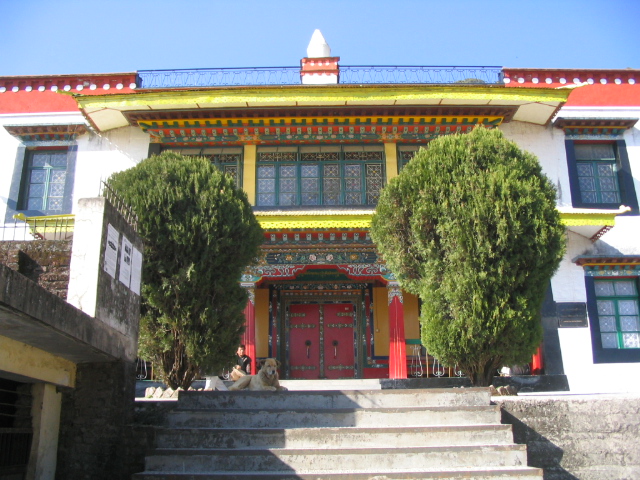
The Library of Tibetan Works and Archives [#4] was founded by His Holiness Tenzin Gyatso, the 14th Dalai Lama on June 11, 1970 and is considered one of the most important libraries and institutions of Tibetan works in the world. It contains sources which were relocated from Tibet during the 1959 escape, including important Tibetan Buddhist manuscripts and archives related the Tibets history, politics, culture and even art. It possesses more than 80,000 manuscripts, books and documents, over 600 thangkas and statues and other artefacts of Buddhist heritage, 6,000 photographs, and many other materials. Library of Tibetan Works and Archives, Official website |
|
|

|
|
Tushita Meditation Centre [#7] is located in the forested hills above McLeod Ganj. It is a centre for the study and practice of Buddhism from the Tibetan Mahayana tradition. They aim to provide a friendly and conducive environment for people of all nationalities and backgrounds to learn about and put into practice the teachings of the Buddha. Tushita Meditation Centre, Official website |
|
Bhagsu Nag Temple and Waterfall [#6] is located 1 km from McLeod Ganj is an ancient Hindu temple dedicated to Bhagsu Nag, the snake god, and to Lord Shiva. A freshwater spring, in which pilgrims to take a holy dip flows through the temple. A beautiful waterfall, well worth visiting, is located about a 20-minute walk from the temptle. The Bhagsu temple is located in the picturesque Bhagsu village, a Gaddi tribal village whose traditional livelihood was herding and farming. The village has become one of the main tourist centre in the area during the last few years, and many of the local people are now engaged in tourism. The village has a large number of restaurants and guesthouses. |
|

|
|
|
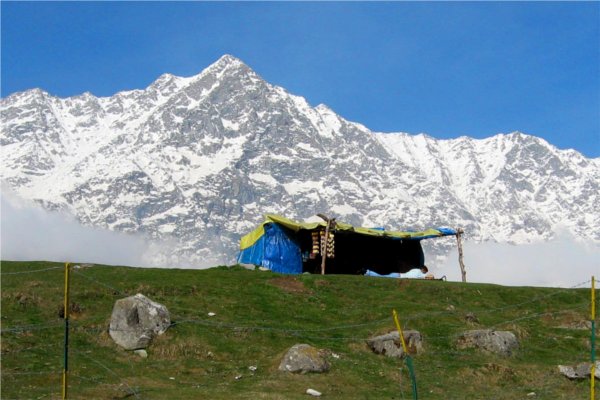
Triund is located approximately 17 km from Dharamshala and is considered to be one of the popular places for excursions. This tourist spot is perched at a height of about 2,827 m, providing 360° view of the surrounding. Dhauladhar mountain range is easily visible from this tourist destination. Triund is also famous for adventure activities like trekking through the oak and deodhar forests. This place is located close to McLeodganj, which is just 10 km from Triund. While travelling to Triund from McLeodganj, visitors can see Rakkar and Dharamkot villages. Buses and taxis are easily available from McLeodganj to visit the scenic spot at Triund. |
|
The Tibet museum [#3] In a small building in the complex of Dalai Lama's temple, you'll find the Tibet Museum. The pristine white interiors are sparingly filled with photographs and Tibetan artefacts. More than a museum, the Tibet Museum is a library of facts, documents, videos, installations and objects related with the Chinese occupation of Tibet. As you enter you'll be taken through the grim but fascinating methods the Chinese used to intimidate the Tibetan people. Huge sepia tinted photographs tell you how Dalai Lama escaped from Tibet into India dressed like a soldier, the Chinese soldiers stationed at the Lhasa border and many more poignant scenes. A video made by a documentary filmmaker takes you through the torment the Tibetan freedom fighters live through even today. On the second floor you'll see images of optimism. Like the first group of people who came to India from Lhasa. You?ll also find the declaration of the Chinese people to the Tibetans and the promises they made. All in all the Tibet museum takes you through the history of a people determined to hold on to their identity. And changes you in way few will understand. The Tibet museum, Official website |
|

|
|
|
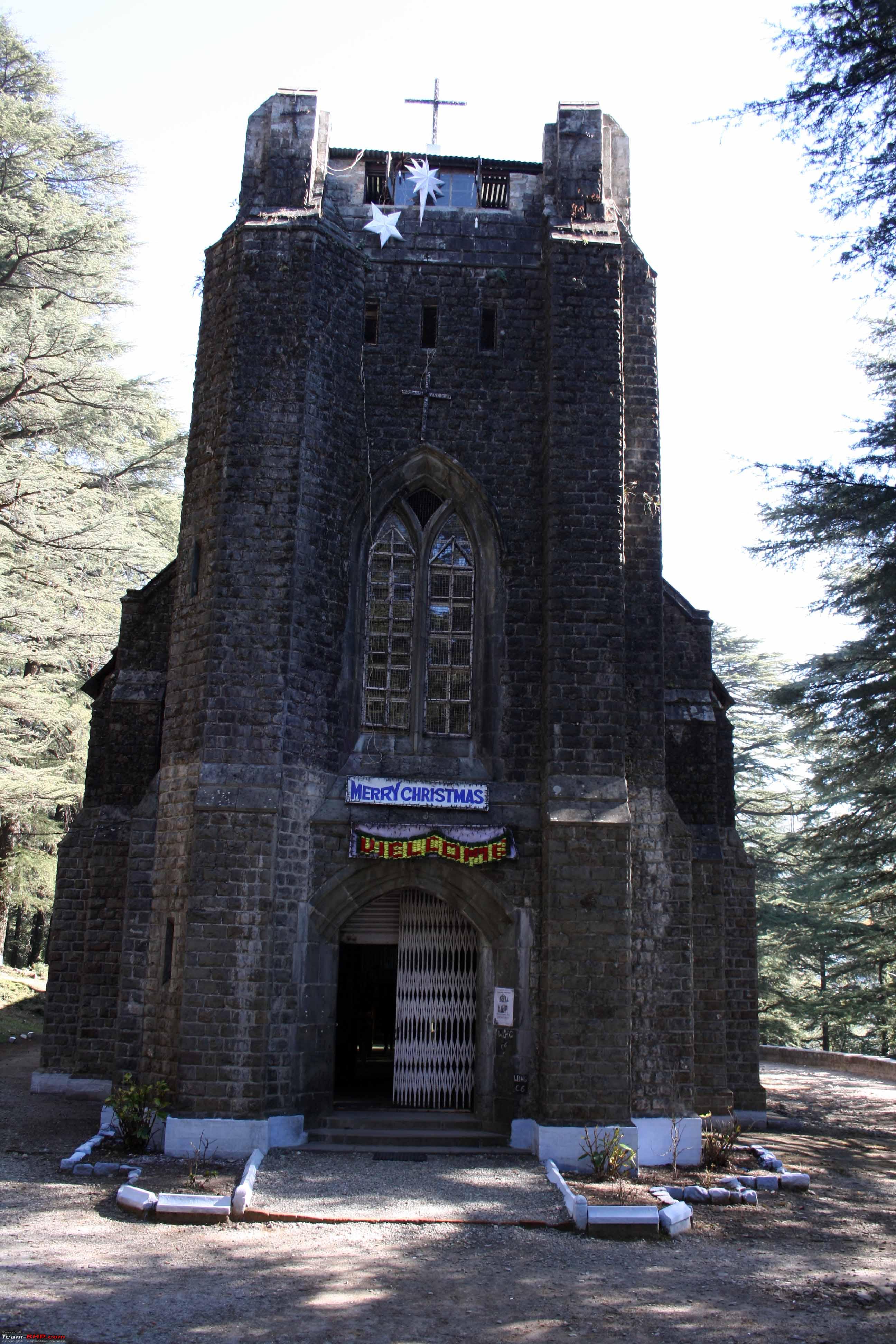
St. John'S Church In Wilderness is an Anglican Church which is dedicated to Saint John. This church was constructed in the year 1852, situated at Forsyth Ganj. It is built in Neo-Gothic architectural style and features Belgian stained-glass windows that were donated by Lady Elgin (Mary Louisa Lambton), wife of Lord Elgin. In 1905 an earthquake destroyed the bell tower of this church. A new bell was built by Stainbank and Mears in 1915, which was brought from England. The Gaggal Airport and Pathankot Railway Station are situated close to this ancient church. |
|
Dal Lake is surrounded by deep Deodhar forests and is situated approximately 11 km from Dharamshala. This lake is an ideal base camp for trekkers coming from McLeodganj. During the month of September, an annual fair is organised on the banks of Dal Lake, where tourists take dip in the holy water. It is believed that dip in the holy Dal Lake removes all the miseries and will be blessed by Lord Shiva. This lake is located in the Kangra District and is situated at a height of 1,775 m above the sea level. It is a brownish looking lake lying on the main road to Naddi and Strawberry hills. |
|

|
Climate top ^
|
Lower Dharamsala is at an altitude of 1400m, while McLeod Ganj is at around 1750m, making them considerably cooler than the plains below.During the months of December and January, snow and sleet is common. Temperatures in January can dip below freezing, while June can go up to 38°C, and the monsoon season from July to September is very wet indeed. Even in March, when the Dalai Lama holds his teachings and the weather down in Delhi is downright balmy you will still need a heavy winter coat, but these can be purchased at reasonable prices in town. |
|
How to reach Dharamsala top ^
By Air
Dharamsala does not have an airport of its own. The nearest
airport is at Gagal, which is 13 kms away and a half an hour to forty five
minutes drive by taxi. This airport links Dharamsala with other cities of India.
By Rail
Dharamsala does not have a railway station of its own. The
nearest railhead is at Pathankot (Chaki Bank), a comfortable overnight journey from Delhi. A
taxi from Pathankot to McLeod Ganj takes about 3 hours. You can also take Bus
which is most of time packed and crowed. By bus it is about 4hrs journey to
Dharamsala.
By Bus
Most people come to Dharamsala by bus. It has good connections with other
parts of North India, although the journeys
are often slow due to the narrow winding roads in the hills.
The main bus terminal is in Lower Dharamsala, but some public HRTC buses to Delhi and Pathankot go all the way to the main square of McLeod Ganj, where you can also book
advance tickets for the return trip. Unreserved HRTC buses from Pathankot cost
Rs.75 and take 3/4 hours to Dharamsala/McLeod Ganj. Many private bus companies
are available for travel from Manali, Dehradun and Delhi. Overnight buses from Delhi, many private ones leaving from the
Tibetan colony of Majnu ka Tilla, take upwards of 13 hours and cost anywhere
from Rs. 450 for a basic bus to Rs. 830 for a plush Volvo.
|
Map
Click on Image to findout where exactly Dharamsala is located in India 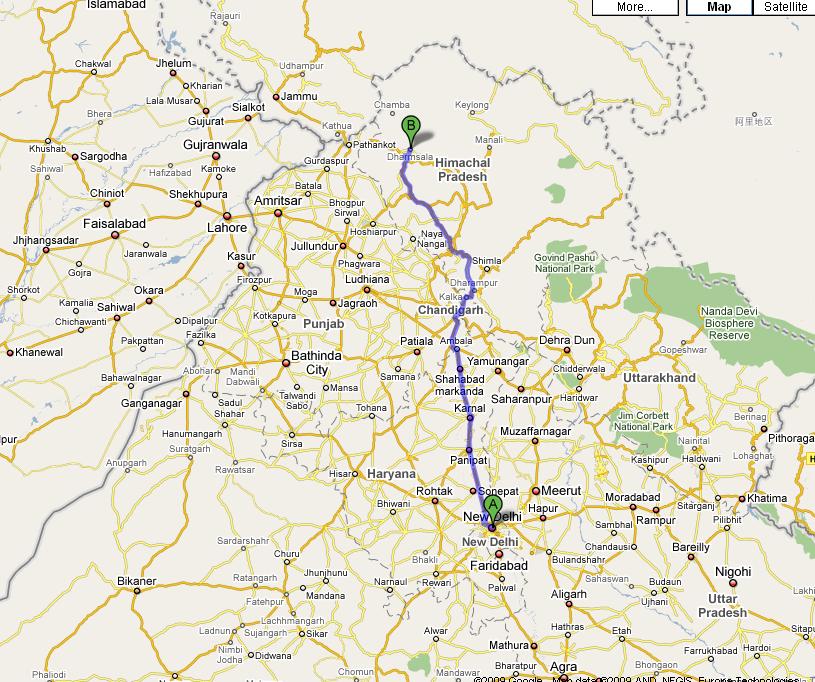
|
|
©2015 8 Auspicious Him View Hotel | Jogiwara Road, Mcleod Ganj, Dharamsala - 176219 | H.P India | 01892-220567 | sonammaja@8aushimview.com
Make a free website with Yola